

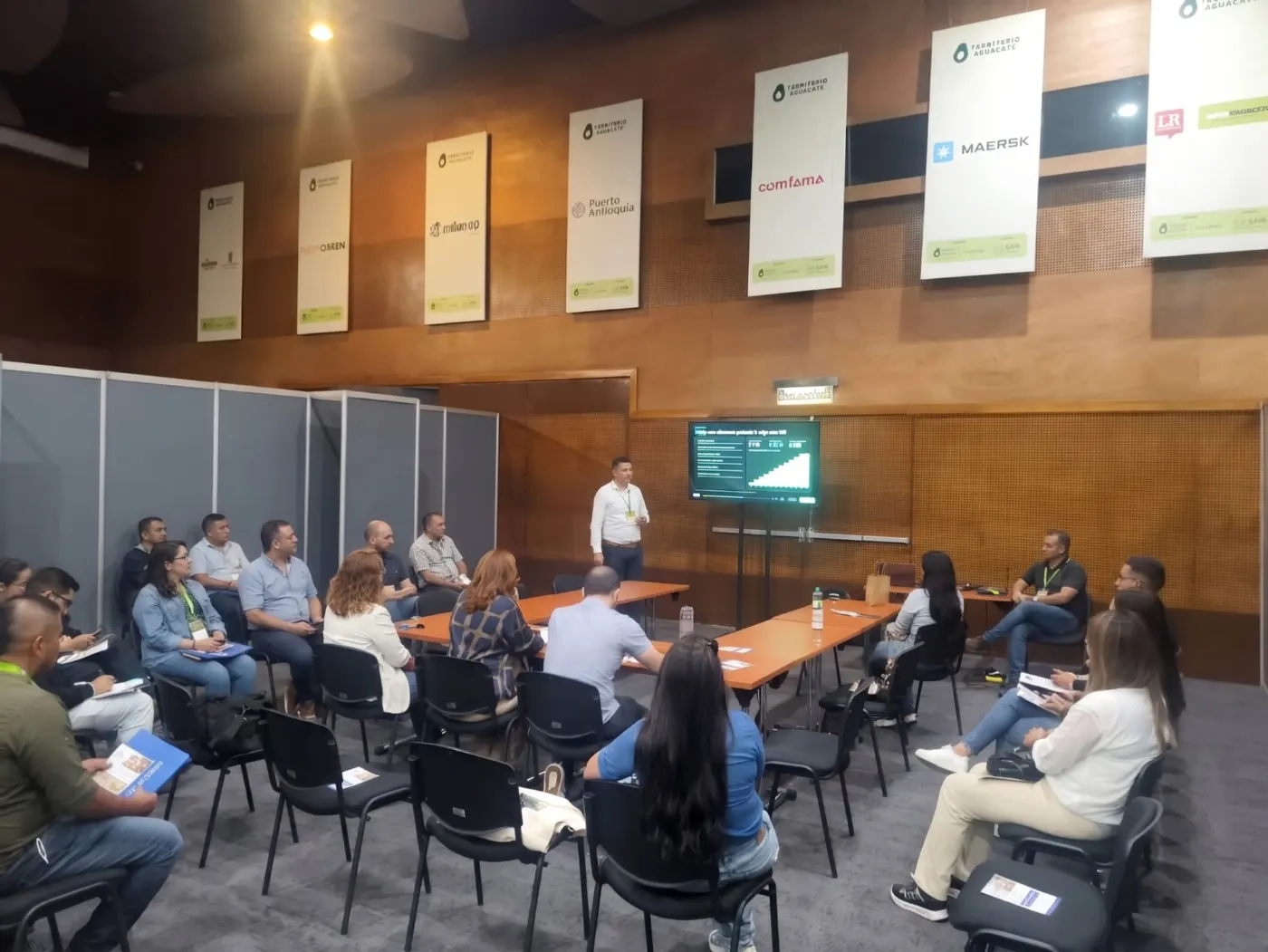
On November 5, 2026, at Territorio Aguacate (Plaza Mayor, Medellín, Colombia), Camilo Andrés Marín and Danny Ocampo gave the talk "Avocado enters the AI era: sales, customers and decisions in one place". The room was full of growers, traders and exporters. This article sums up what we showed for those who could not be there.
The problem: selling over WhatsApp does not scale
Most farms still sell the way they did ten years ago: phone calls, WhatsApp messages, prices that change depending on who asks, and a notebook (or a spreadsheet) where dispatches are written down. It works while orders are few. When buyers from other cities, supermarkets or exporters arrive, the problems start:
- Nobody knows for sure how much stock is still available.
- Volume prices are negotiated one by one.
- Sales are scattered across chats, so there is no way to see which customer buys the most or who stopped buying.
A wholesale store, not a corner shop
An online store for a farm looks nothing like a clothing store. In the demo we brought to the fair, the catalog is sold by shipping unit, not by single fruit:
- Bulk by the kilo, from 10 kg.
- By the box, with clear weight and size grade.
- By the pallet and by the ton, for supermarkets and traders.
- By the container, for export.
- By-products (oil, guacamole) and nursery plants, each with its own unit.
Buyers see the price, the minimum order and the real availability, pay online, and the farm receives an organized order. The money goes to the farm's account, not ours.
A dashboard that answers questions
What caught the most attention was the AI dashboard. Instead of digging through tables, the farm owner asks in plain words:
Which customer bought the most from me this month, and how much do they owe?
How many boxes of extra-grade Hass do I have left for next week?
The AI answers with the farm's own data: sales, customers, inventory and reference prices from the wholesale market, which the system updates on its own. It does not make up figures: if a piece of data is not in the system, it says so.
The dashboard has three views depending on who uses it: the farm (production and inventory), the company (sales, customers and team, with role-based permissions) and export (documents, markets and simulations).
The math of exporting through Puerto Antioquia
The question we heard most was: should I export or sell in the domestic market? To answer it, the demo includes a container simulator that walks through the trip step by step, from packing at the farm to arrival in Europe via Puerto Antioquia, and compares:
- what that same volume would earn in the domestic market at the day's wholesale price, and
- what it would earn exported, based on the FOB price, the exchange rate and the cost of the trip.
With that day's numbers, the domestic market came out ahead for a small farm; export started to win above a certain FOB price. That is exactly the value of the tool: it does not decide by gut feeling, it shows the point where the answer changes. The demo figures are for reference; every real export must be validated with a customs agency.
What does a farm need to get started?
Less than it seems:
- Its catalog, with the units it sells in (kilo, box, pallet, ton).
- Its volume prices.
- A payment gateway account to receive the money.
With our commission-based app model, the farm does not pay for development: it pays a one-time setup and 10% of what is sold through the store. If there are no sales in a month, there is no commission.
The demo from the talk is still online at aguacate.andesync.com: you can browse the wholesale store and see how it works. And if you would like to see it with your own farm's products, get in touch for a free assessment.