

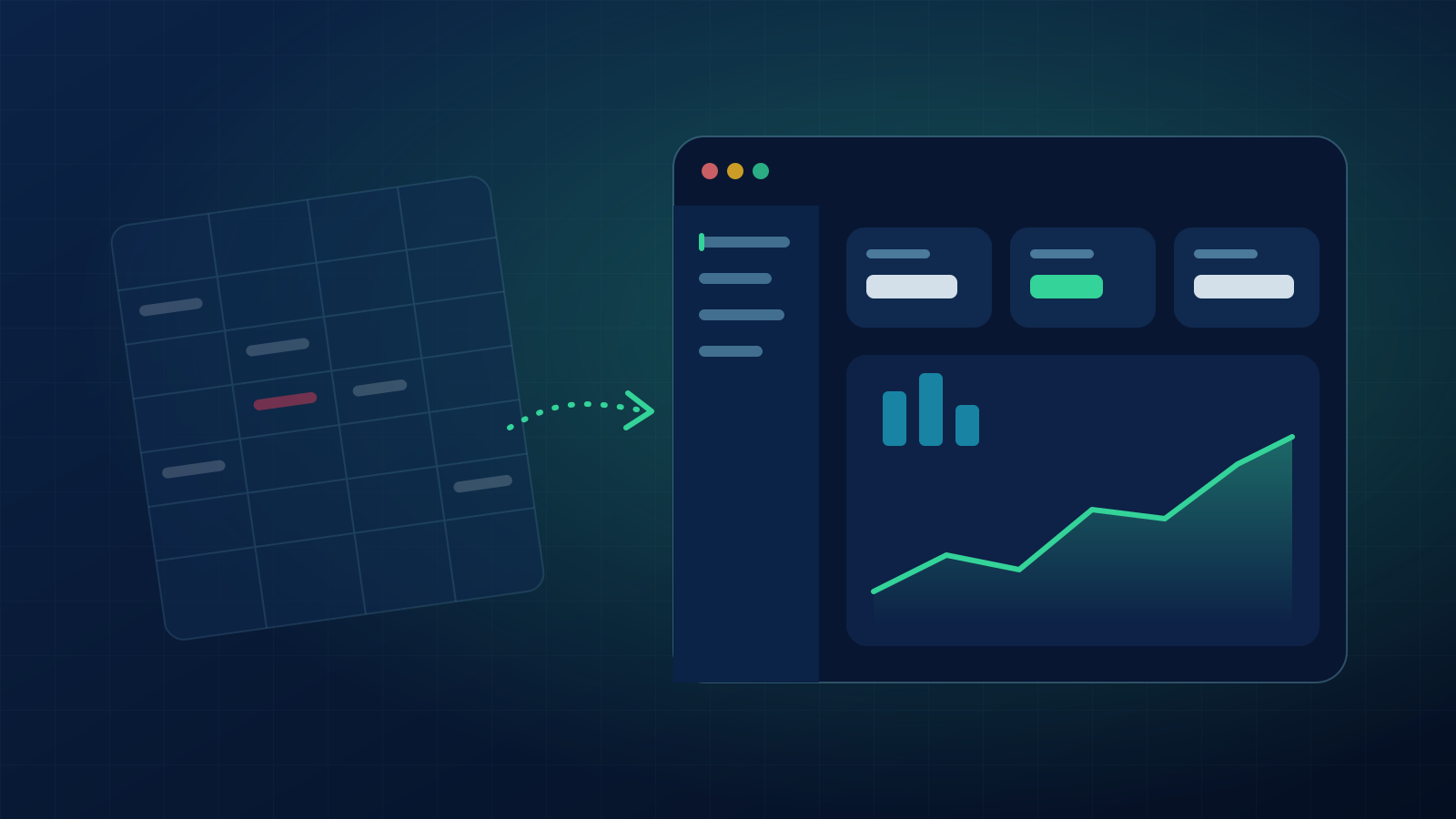
Almost every company starts out with spreadsheets, and that is fine: they are flexible and cheap. The trouble begins when the company grows and Excel becomes the core system for everything. These are the signs that it is time to think about software built around the way you work.
1. You have several versions of the same file
"Inventory_final", "Inventory_final_v2", "Inventory_THIS_ONE". If nobody knows which one is right, decisions get made with stale data. A system keeps a single version of the truth, updated in real time.
2. You spend hours putting together the monthly report
If someone spends a day or two at every month-end copying data from one place to another to build a report, that time can be won back. Custom software generates the KPIs on its own and shows them on a real-time dashboard, with PDF or Excel export whenever management asks.
3. Typing mistakes cost you money
An extra zero on an order, the wrong product code, overtime that never got logged. When data is typed by hand several times, mistakes are inevitable. A system validates information as it is entered and avoids typing it twice.
4. Every department works on its own island
Sales does not know what is in the warehouse, the warehouse does not know what was sold, and HR keeps shifts in yet another file. Custom software connects departments: when a sale is recorded, stock is deducted automatically and the dispatch is scheduled.
5. Off-the-shelf tools force you to change how you work
Boxed software is fine for standard processes. But if your operation has its own rules (rotating shifts, volume pricing, warehouses across several sites, special approvals), you end up adapting your company to the program or filling the gaps with more Excel.
6. You depend on one person who "knows how the file works"
If that person gets sick or leaves, nobody understands the formulas. That is a huge risk for the operation. A documented system does not depend on anyone's memory.
7. You cannot quickly answer basic questions
How much did we sell yesterday by site? Which product is about to run out? How much overtime did we pay this month? If answering takes hours, you are making decisions blind.
What does custom software include?
It depends on each company, but the most common modules are:
- Human resources: employees, shifts, overtime, absences and documents.
- Inventory: stock in and out, warehouses and minimum-stock alerts.
- Internal logistics: orders, dispatches and delivery tracking.
- KPI dashboard for management, filtered by date, site and department.
- Applied AI: invoice reading, demand forecasting and alerts when something goes off track.
When do you NOT need it yet?
If you are a small team, your processes change every month, or an off-the-shelf tool already covers 90% of what you need, it is probably not the right time. Custom software is an investment, and it makes sense when the time and mistakes it saves are worth more than what it costs.
How we work at Andes Sync
We start by understanding your processes, then show you the structure and the screens, and deliver module by module so your team can start using it early. The system is exclusive to your company and we maintain it for a monthly fee that includes support and an SLA. More details on the custom software page.
Recognized yourself in three or more signs? Let's talk: the assessment is free.