

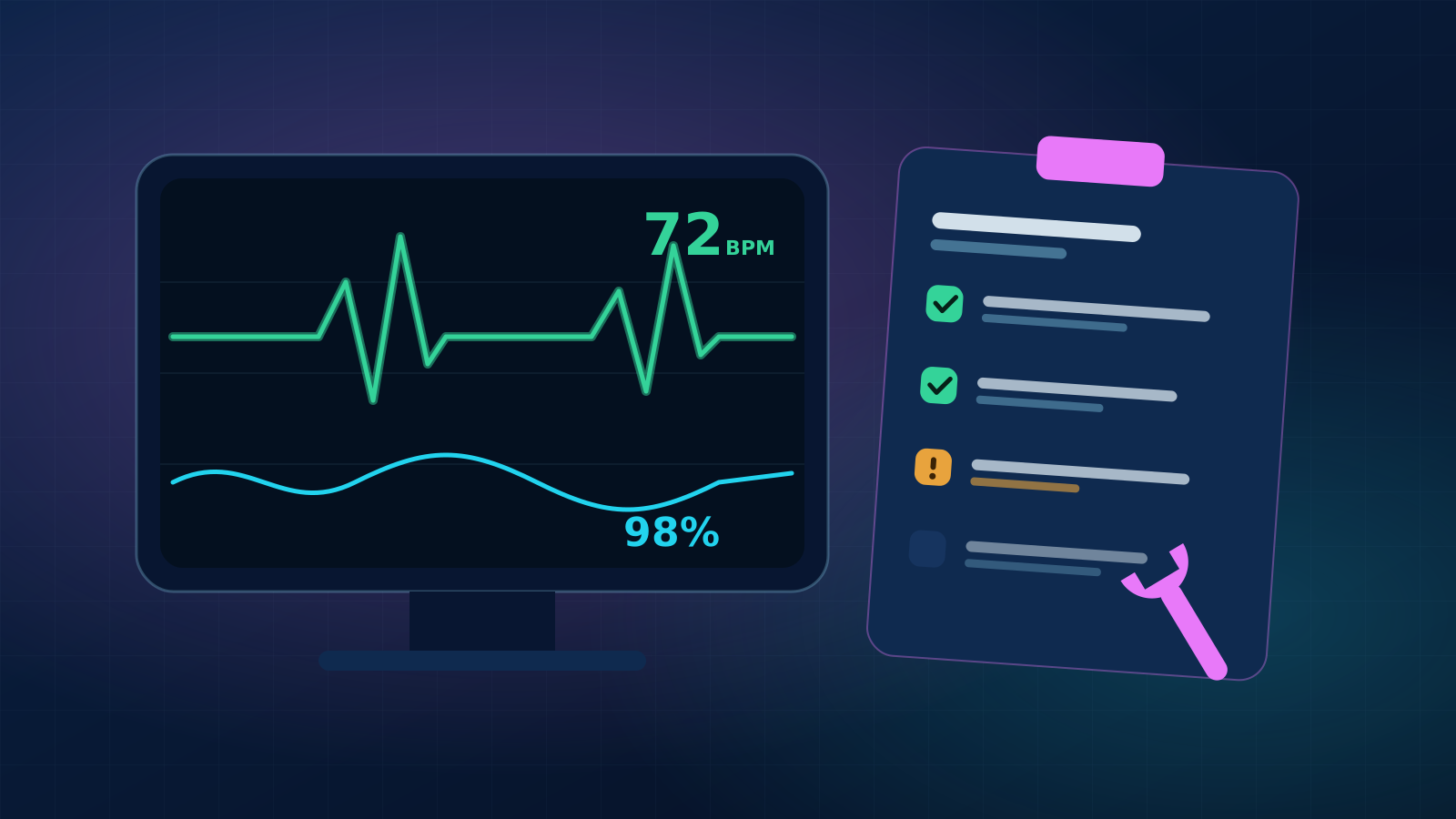
In a hospital, a device out of service is not just a money problem: it is a patient waiting, a surgery being rescheduled or a test that cannot be done. That is why managing the maintenance of medical equipment is one of the most critical tasks in clinical engineering, and also one of the most paper-heavy.
What is a CMMS?
CMMS stands for Computerized Maintenance Management System. In healthcare, it brings together everything that happens to each medical device in one place:
- its service record: technical data, location, supplier, manuals and documents;
- scheduled preventive maintenance and corrective maintenance when something fails;
- the work orders assigned to each engineer or technician;
- spare parts and related purchases;
- reports for internal audits and for the bodies that regulate the sector.
The problem with folders and spreadsheets
Many institutions still track maintenance in paper folders and spreadsheets. It works until someone needs answers to questions like these:
- Which devices are overdue for preventive maintenance?
- How many times has this monitor failed in the last year, and how much has it cost us?
- Is the spare part the ICU device needs in stock?
- Do we have the full traceability ready for next week's audit?
When information is scattered, answering takes days, and that shows during an audit.
What an institution gains with a CMMS
Equipment availability. Preventive maintenance is scheduled and the system warns you before it falls overdue, which reduces unexpected failures.
Audits without the scramble. Each device's traceability (what was done, when, by whom and with which part) is recorded and can be exported as a compliance report.
Visible costs. You know how much each device costs to maintain, which ones fail most and when it makes sense to replace them instead of repairing them again.
Information by site. For networks with several sites, everything is visible in one place with filters by site.
Where does artificial intelligence come in?
One of the most time-consuming tasks in clinical engineering is searching through technical manuals hundreds of pages long. In Andes Tech CMMS, Andes Sync's healthcare platform, engineers can ask in natural language:
The monitor in ICU 3 shows an error code. What does it mean and what should I do?
The AI answers based on that model's manual and the device's own history, suggests the steps to follow and the spare parts, and can prepare the work order and the report. The engineer always makes the final call: the AI saves search time, it does not replace clinical judgment.
Who is it for?
Hospitals, clinics and laboratories, including high-complexity ones, that need to manage the maintenance of their medical equipment with order and traceability.
How to get started
The most important step is loading the inventory: the devices, their sites, their manuals and the available history. From there, the biomedical engineering team and the user departments are trained, and the system starts scheduling and recording.
Learn more on the hospital maintenance software page or directly at andestech.cloud. If you would like a demo, get in touch.